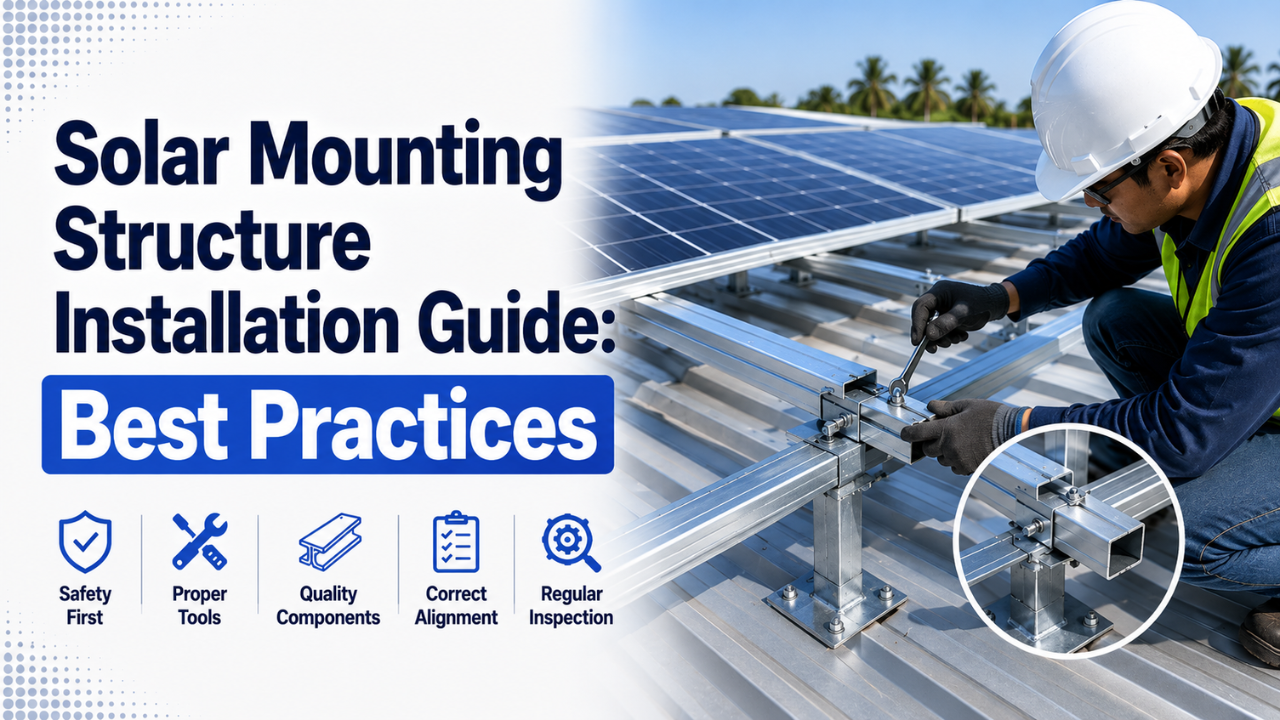
Professional Solar Mounting Structure Installation Guide: Best Practices for Long-Term Performance
A solar power system is only as strong as the structure supporting it. While solar panels generate electricity and inverters manage power conversion, the mounting structure serves as the backbone of the entire installation.
Poor structural installation can lead to misalignment, water accumulation, increased wind loads, loose fasteners, and reduced system lifespan. Even high-quality solar modules may underperform when installed on improperly aligned mounting structures.
Despite its importance, mounting structure installation often receives less attention than electrical components. This guide provides a practical overview of solar mounting structure installation best practices to help EPC contractors, installers, project managers, and maintenance teams achieve safer and more reliable solar projects.
Why Proper Solar Mounting Structure Installation Matters
The mounting structure performs several critical functions throughout the life of a solar plant.
It must:
- Support module weight safely
- Withstand wind loads
- Resist corrosion
- Maintain proper module alignment
- Ensure structural stability for decades
Installation errors at the structural stage are often difficult and expensive to correct after modules are installed.
A properly installed structure improves:
- System reliability
- Energy generation efficiency
- Safety compliance
- Maintenance accessibility
- Asset lifespan
Site Assessment Before Installation
Successful projects begin before the first structural component arrives at the site.
A thorough site assessment helps identify conditions that may affect installation quality.
Key Evaluation Areas
Soil Conditions
Soil characteristics influence foundation design and anchoring methods.
Wind Zone Requirements
Local wind conditions determine structural loading requirements.
Terrain Analysis
Uneven surfaces may require grading or customized foundation solutions.
Drainage Planning
Water accumulation around foundations can affect long-term stability.
Accessibility
Equipment movement and installation logistics should be evaluated before construction begins.
A detailed site survey minimizes installation delays and reduces the likelihood of structural modifications later.
Foundation Preparation Guidelines
The foundation transfers all structural loads to the ground. Any weakness at this stage can compromise the entire system.
Common Foundation Types
RCC Foundations
Widely used for ground-mounted solar projects.
Pile Foundations
Suitable for large-scale utility installations.
Driven Piles
Often selected for faster installation schedules.
Ballasted Foundations
Common where ground penetration is restricted.
Foundation Best Practices
- Verify foundation locations before excavation.
- Confirm dimensions according to approved drawings.
- Ensure proper curing time for concrete foundations.
- Maintain accurate spacing between foundations.
- Inspect anchor bolt positioning before installation.
Carefully constructed foundations help distribute structural loads effectively and support the long-term stability of the solar mounting system.
Step-By-Step Solar Mounting Structure Installation Process
Step 1: Material Verification
Before installation begins, inspect all delivered components.
Check:
- Material specifications
- Surface coating quality
- Component dimensions
- Quantity verification
- Transport damage
Only approved materials should enter the installation area.
Step 2: Foundation Alignment Check
Verify that all foundations match project drawings.
Use surveying equipment to confirm:
- Center-to-center spacing
- Elevation levels
- Bolt positions
- Structural alignment
Even small deviations can create assembly challenges later.
Step 3: Installing Vertical Supports
Vertical columns form the primary load-bearing framework.
Best practices include:
- Confirm plumb alignment
- Use calibrated installation tools
- Secure temporary bracing if necessary
- Verify positioning before final tightening
Step 4: Mounting Main Structural Members
Install rails, beams, and support sections according to engineering drawings.
At this stage, installers should continuously verify:
- Structural levelness
- Spacing accuracy
- Alignment consistency
- Connection quality
Step 5: Cross-Bracing Installation
Cross-bracing improves structural rigidity and resistance to wind forces.
Proper bracing helps prevent:
- Structural movement
- Excessive vibration
- Long-term deformation
Step 6: Final Tightening And Inspection
Once alignment is confirmed, perform final tightening of all connections.
A systematic tightening sequence helps maintain structural accuracy.
Alignment And Levelness Best Practices
Accurate alignment directly affects module installation quality.
Misaligned structures can result in:
- Uneven module rows
- Installation difficulties
- Increased stress on mounting points
- Reduced visual appearance
Recommended Checks
- Row straightness
- Structural elevation
- Rail alignment
- Diagonal measurements
- Module mounting points
Frequent inspections during installation help prevent cumulative alignment errors.
Fastener Installation Guidelines
Bolted connections are critical to structural integrity.
Best Practices
- Use specified fasteners only.
- Follow recommended tightening procedures.
- Inspect washers and nuts before installation.
- Replace damaged hardware immediately.
- Conduct periodic torque verification.
Improper fastening is one of the most common causes of structural failures.
Corrosion Protection Considerations
Solar mounting structures operate outdoors for decades.
Protective coatings play a major role in maintaining structural integrity.
Common Protection Methods
Hot-Dip Galvanization
Provides excellent corrosion resistance.
Pre-Galvanized Steel
Suitable for specific applications.
Zinc-Aluminum Coatings
Used in certain environmental conditions.
Inspection Areas
- Welded joints
- Cut edges
- Fastener connections
- Surface damage
Any damaged coating should be addressed before project completion.
Common Solar Structure Installation Mistakes
Many structural issues can be traced back to avoidable installation errors.
Frequent Problems
Incorrect Foundation Layout
Misplaced foundations create assembly difficulties.
Inadequate Tightening
Loose fasteners can compromise stability.
Ignoring Alignment Checks
Small alignment errors can multiply across large installations.
Using Non-Approved Components
Substituted materials may not meet design requirements.
Skipping Quality Inspections
Undetected issues often become expensive repairs later.
A disciplined installation process helps prevent these problems.
Quality Control Checklist
Before module installation begins, verify:
✔ Foundation dimensions approved
✔ Structural alignment checked
✔ Vertical columns plumb
✔ Bracing installed correctly
✔ Fasteners tightened properly
✔ Coating condition inspected
✔ Rail spacing verified
✔ Structural drawings followed
✔ Site inspection completed
✔ Documentation updated
This checklist helps ensure readiness for the next installation phase.
Safety Best Practices During Installation
Safety should remain a priority throughout structural installation.
Recommended Safety Measures
- Use certified lifting equipment.
- Follow fall-protection requirements.
- Conduct daily toolbox meetings.
- Inspect tools regularly.
- Maintain clear work zones.
Safe installation practices reduce project risks and improve productivity.
Conclusion
The mounting structure is the foundation of every successful solar installation. A well-installed structure supports module performance, improves system reliability, and helps maximize project lifespan.
By following proven solar mounting structure installation best practices, EPC contractors and installers can reduce failures, improve quality, and deliver projects that perform reliably for years.
Careful planning, accurate alignment, proper fastening, and continuous quality control remain the keys to long-term structural success.
Contact us today for robust mounting structure solutions engineered to support reliable performance in diverse site conditions.
FAQs
What is a solar mounting structure installation guide?
A solar mounting structure installation guide provides step-by-step instructions and best practices for installing solar support structures safely and accurately.
Why is proper structure installation important?
Correct installation improves stability, safety, and long-term system performance.
What foundation is best for solar mounting structures?
The ideal foundation depends on soil conditions, project size, and engineering requirements.
How do installers check alignment?
Alignment is verified using surveying equipment, levels, and measurement tools.
What causes solar mounting structure failures?
Common causes include poor foundations, incorrect alignment, loose fasteners, and inadequate corrosion protection.