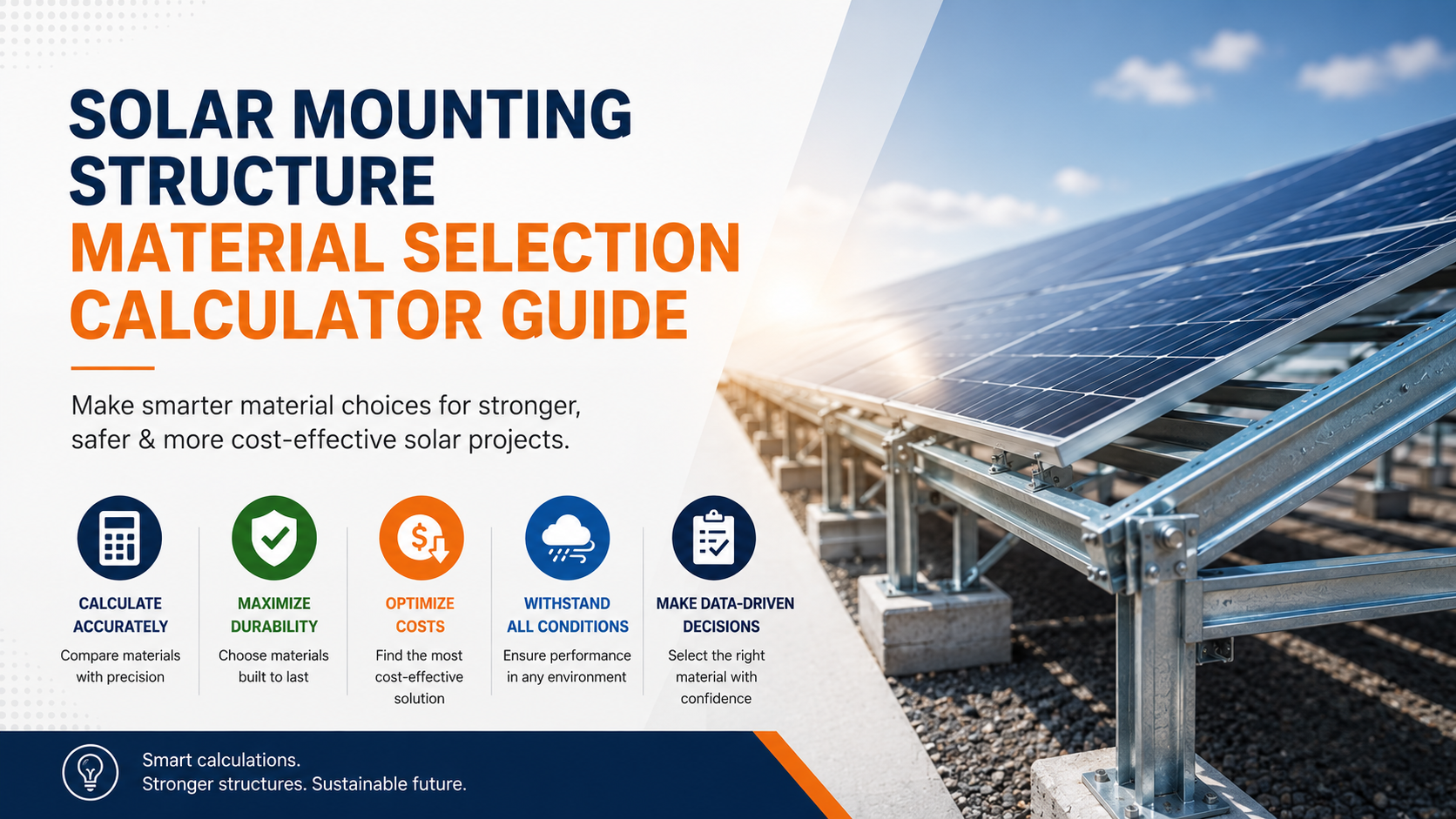
Selecting the right material for a solar mounting structure is one of the most important decisions in any solar project. While solar panels often receive the most attention, the mounting structure determines how well the system withstands environmental conditions over its operational life.
Project developers, EPC contractors, and procurement teams frequently compare galvanized iron (GI), aluminum, and galvalume structures. Each material offers distinct advantages, but the ideal choice depends on location, climate, project size, maintenance expectations, and budget.
Many buyers focus only on initial pricing and overlook long-term performance factors such as corrosion resistance, structural durability, and maintenance costs. This Solar Mounting Structure Material Selection Calculator Guide provides a practical framework to help decision-makers evaluate materials based on project requirements rather than assumptions.
Understanding The Factors That Influence Material Selection
Before comparing materials, it is important to understand the variables that affect mounting structure performance throughout a solar plant’s lifespan.
Key Factors To Consider
- Climate conditions
- Corrosion exposure
- Wind load requirements
- Project lifespan
- Maintenance accessibility
- Installation environment
- Structural strength requirements
- Initial investment
- Lifecycle costs
- Sustainability goals
These factors form the foundation of any Solar Mounting Structure Material Selection Calculator Guide and help determine which material delivers the best long-term value.
Aluminum vs GI vs Galvalume: Material Comparison
When evaluating solar mounting materials, buyers typically compare three common options.
Galvanized Iron (GI)
GI structures are manufactured using steel coated with zinc for corrosion protection.
Advantages
- Strong structural performance
- Widely available across India
- Cost-effective for large projects
- Suitable for high wind-load regions
Limitations
- Heavier than aluminum
- May require maintenance in highly corrosive environments
- Zinc coating quality varies between manufacturers
GI remains one of the most widely used materials discussed in any Solar Mounting Structure Material Selection Calculator Guide due to its balance of strength and affordability.
Aluminum Structures
Aluminum mounting systems have gained popularity in commercial and rooftop projects.
Advantages
- Lightweight construction
- Excellent corrosion resistance
- Easier transportation and handling
- Lower maintenance requirements
Limitations
- Higher material cost
- Lower structural stiffness compared to steel
- Not always preferred for heavy utility-scale projects
Aluminum is often selected for projects where corrosion resistance and weight reduction are major priorities.
Galvalume Structures
Galvalume combines zinc, aluminum, and silicon coatings to improve corrosion protection.
Advantages
- Enhanced corrosion resistance
- Longer service life in many environments
- Attractive lifecycle economics
- Reduced maintenance needs
Limitations
- Availability may vary by region
- Higher upfront cost than standard GI
Galvalume has become increasingly relevant in modern Solar Mounting Structure Material Selection Calculator Guide discussions due to its durability advantages.
Climate-Based Material Selection Guide
One material does not fit every location. Climate conditions significantly influence long-term performance.
Coastal Regions
Coastal environments expose structures to salt-laden air and high humidity.
Recommended:
- Aluminum
- Galvalume
Considerations:
- Superior corrosion resistance
- Reduced maintenance frequency
Dry And Arid Regions
Areas with low humidity present fewer corrosion concerns.
Recommended:
- GI
- Galvalume
Considerations:
- Strong structural performance
- Cost-efficient installation
High Rainfall Zones
Regions experiencing frequent rainfall require enhanced corrosion protection.
Recommended:
- Galvalume
- Aluminum
Industrial Zones
Chemical exposure can accelerate material degradation.
Recommended:
- Aluminum
- High-quality Galvalume
Climate evaluation is one of the most critical elements of a Solar Mounting Structure Material Selection Calculator Guide.
Cost Comparison And Lifecycle Value
Material selection should not be based solely on purchase price.
Initial Cost Comparison
| Material | Initial Cost |
| GI | Lower |
| Galvalume | Medium |
| Aluminum | Higher |
Long-Term Cost Considerations
Project owners should evaluate:
- Maintenance expenses
- Corrosion-related repairs
- Replacement costs
- Downtime risks
- Asset lifespan
A Solar Mounting Structure Material Selection Calculator Guide should always include lifecycle economics rather than focusing only on procurement budgets.
For example, a lower-cost material may require additional maintenance over twenty-five years, increasing total ownership costs.
How To Use A Solar Mounting Structure Material Selection Calculator Guide
The following framework helps buyers identify the most suitable material.
Step 1: Assess Climate Conditions
Determine whether the project site experiences:
- Coastal exposure
- High humidity
- Industrial pollution
- Extreme temperatures
Step 2: Define Structural Requirements
Evaluate:
- Wind speed
- Module configuration
- System capacity
- Ground conditions
Step 3: Establish Budget Priorities
Consider:
- Initial investment
- Long-term maintenance
- Lifecycle costs
Step 4: Review Maintenance Accessibility
Remote sites often benefit from materials requiring minimal maintenance.
Step 5: Evaluate Project Lifespan
Projects designed for 25 years or longer should prioritize durability and corrosion resistance.
Following this process ensures the Solar Mounting Structure Material Selection Calculator Guide supports informed decision-making.
Common Material Selection Mistakes
Several avoidable mistakes increase project risks.
Choosing Based Only On Price
Selecting the least expensive material at the purchasing stage may lead to higher maintenance and replacement expenses over the life of the project.
Ignoring Climate Conditions
A material that performs well inland may face challenges in coastal environments.
Overlooking Coating Quality
Protective coatings significantly affect service life.
Underestimating Maintenance Costs
Maintenance requirements can vary considerably between materials.
Using Generic Specifications
Every site requires a material selection strategy based on actual project conditions.
Avoiding these mistakes improves plant reliability and operational performance.
Which Material is Best For Solar Mounting Structures In India?
There is no universal answer because project requirements differ.
Choose GI When:
- Budget is a priority
- Structural strength is critical
- The project is located in low-corrosion environments
Choose Aluminum When:
- Corrosion resistance is essential
- Weight reduction is important
- Rooftop applications require easier handling
Choose Galvalume When:
- Long-term durability is the primary goal
- Moderate to high corrosion resistance is required
- Lifecycle value outweighs initial cost
The most effective Solar Mounting Structure Material Selection Calculator Guide aligns material performance with environmental and operational requirements.
Conclusion
Material selection plays a major role in the durability, safety, and profitability of solar projects. While GI, aluminum, and galvalume each offer distinct benefits, the best choice depends on climate conditions, structural demands, maintenance expectations, and lifecycle costs.
A well-planned Solar Mounting Structure Material Selection Calculator Guide helps project developers move beyond simple price comparisons and focus on long-term performance. By evaluating environmental exposure, project objectives, and ownership costs, buyers can select a mounting structure material that supports reliable solar generation for decades.
Contact us today to discuss your solar mounting structure requirements. Our experts can help you choose the right material based on your project’s location, performance goals, and budget.
FAQs
1. What is a Solar Mounting Structure Material Selection Calculator Guide?
A Solar Mounting Structure Material Selection Calculator Guide helps compare GI, aluminum, and galvalume materials based on climate, cost, and durability.
2. Why is a Solar Mounting Structure Material Selection Calculator Guide important?
A Solar Mounting Structure Material Selection Calculator Guide helps buyers choose materials that match project conditions and long-term performance goals.
3. Which material is recommended in a Solar Mounting Structure Material Selection Calculator Guide for coastal areas?
Most Solar Mounting Structure Material Selection Calculator Guide recommendations favor aluminum or galvalume for coastal environments.
4. Can a Solar Mounting Structure Material Selection Calculator Guide reduce maintenance costs?
Yes, a Solar Mounting Structure Material Selection Calculator Guide helps identify materials that require less maintenance over time.
5. Does a Solar Mounting Structure Material Selection Calculator Guide consider lifecycle costs?
A Solar Mounting Structure Material Selection Calculator Guide evaluates both upfront investment and long-term ownership costs.