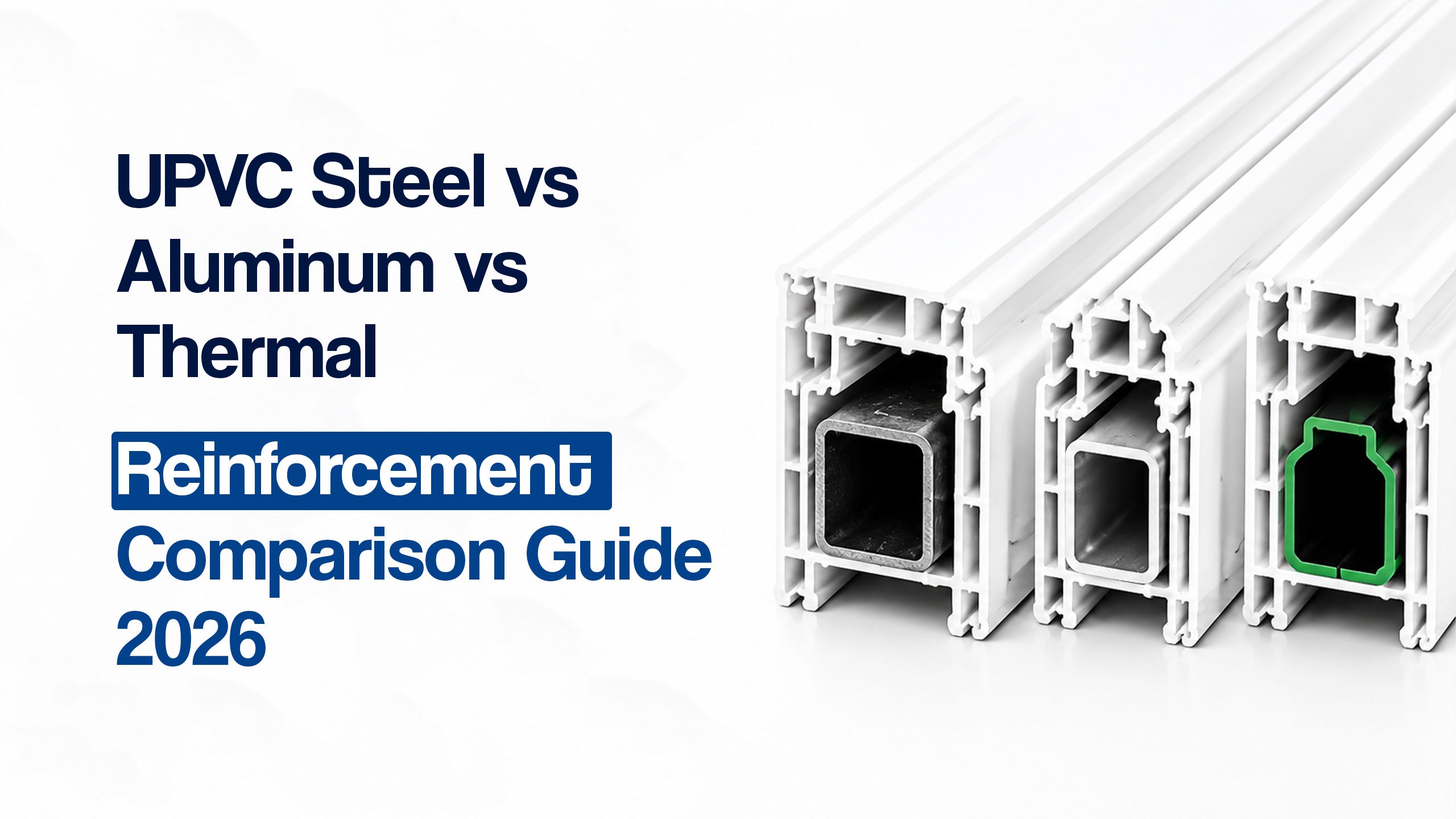
UPVC Steel vs Aluminum vs Thermal Reinforcement Comparison Guide 2026
Choosing the right reinforcement is one of the most important decisions in uPVC window manufacturing. For many years, steel reinforcement has been the preferred choice in the uPVC industry. However, newer alternatives such as aluminum and thermal reinforcement are now gaining attention in contemporary building and window system designs.
Architects, fabricators, and developers are now comparing multiple reinforcement options based on structural strength, thermal efficiency, corrosion resistance, sustainability, and long-term cost.
However, most manufacturers only promote their preferred material instead of providing a practical and unbiased comparison. As a result, many buyers struggle to determine which reinforcement option is most suitable for their project requirements.
This guide compares steel, aluminum, and thermal reinforcement systems for uPVC windows based on Indian climatic conditions, fabrication requirements, and real-world performance factors.
Why Reinforcement Matters in UPVC Windows
UPVC profiles alone cannot support heavy loads, large openings, or continuous operational stress. Reinforcement improves:
- Structural strength
- Wind-load resistance
- Hardware support
- Dimensional stability
- Product lifespan
The type of reinforcement selected directly affects the durability, energy efficiency, and maintenance requirements of the window system.
As modern buildings demand larger glass areas and better thermal performance, reinforcement technology is evolving rapidly.
Understanding Steel Reinforcement in UPVC Windows
Steel reinforcement remains the most widely used option in India due to its high strength and cost-effectiveness.
Galvanized steel sections are inserted inside the uPVC profile chamber to provide structural support.
Advantages Of Steel Reinforcement
High Structural Strength
Steel offers excellent load-bearing capacity for large windows and doors.
Better Screw Holding
Steel provides strong hardware fixing and long-term operational stability.
Cost-Effective
Compared to advanced thermal systems, steel reinforcement is more affordable for large-scale projects.
Suitable For High Wind Loads
Steel performs well in high-rise and heavy-duty applications.
Limitations Of Steel Reinforcement
Thermal Conductivity
Steel transfers heat more easily compared to thermal reinforcement systems.
Corrosion Risk
Low-quality galvanization may lead to rust formation in humid environments.
Higher Weight
Steel reinforcement increases the overall system weight.
Despite these limitations, steel remains the preferred choice for most residential and commercial projects in India.
Aluminum Reinforcement in UPVC Windows
Aluminum reinforcement is gaining attention due to its lightweight properties and corrosion resistance.
Unlike galvanized steel, aluminum naturally resists rust and performs well in humid conditions.
Advantages Of Aluminum Reinforcement
Lightweight Structure
Aluminum reduces overall frame weight and simplifies handling during installation.
Excellent Corrosion Resistance
Aluminum performs well in coastal and moisture-prone regions.
Better Thermal Performance Than Steel
Aluminum transfers less heat compared to conventional steel systems.
Modern Appearance
Aluminum systems are often used in premium architectural designs.
Limitations Of Aluminum Reinforcement
Higher Cost
Aluminum reinforcement is generally more expensive than galvanized steel.
Lower Structural Strength
Steel typically provides better load-bearing performance for large-span applications.
Hardware Compatibility Challenges
Some systems may require specialized fixing methods.
Aluminum reinforcement is commonly used in premium residential and lightweight architectural applications.
What Is Thermal Reinforcement?
Thermal reinforcement systems are designed to improve insulation performance while maintaining structural support.
These systems use:
- Composite materials
- Fiberglass reinforcement
- Thermal inserts
- Hybrid reinforcement technologies
Thermal reinforcement is becoming popular in energy-efficient building projects.
Advantages Of Thermal Reinforcement
Superior Thermal insulation
Thermal systems reduce heat transfer significantly.
Energy Efficiency
Helps maintain more stable indoor temperatures while supporting better energy efficiency inside buildings.
Lightweight Design
Most thermal reinforcement systems are lighter than steel.
Reduced Condensation
Lower thermal conductivity minimizes moisture formation.
Limitations Of Thermal Reinforcement
High initial Cost
Thermal reinforcement systems are expensive compared to steel.
Limited Availability in india
The Indian market still has limited adoption and supply.
Lower Familiarity Among Fabricators
Many fabricators are more experienced with steel systems.
Thermal reinforcement is mostly preferred in premium green building projects and energy-focused applications.
Steel vs Aluminum vs Thermal Reinforcement Comparison Table
| Feature | Steel Reinforcement | Aluminum Reinforcement | Thermal Reinforcement |
| Structural Strength | Excellent | Moderate | Moderate |
| Corrosion Resistance | Depends on galvanization | Excellent | Excellent |
| Thermal insulation | Low | Medium | High |
| Weight | Heavy | Lightweight | Lightweight |
| Cost | Affordable | Higher | Premium |
| Wind Load Performance | Excellent | Moderate | Moderate |
| installation Familiarity | High | Medium | Low |
| Sustainability | Recyclable | Highly recyclable | Depends on material |
| Maintenance | Moderate | Low | Low |
| Best Application | Commercial & large windows | Premium residential | Energy-efficient buildings |
Which Reinforcement is best for Indian conditions?
Indian environmental conditions vary significantly between regions. Reinforcement selection should depend on:
- Climate
- Project type
- Budget
- Structural requirement
- Energy-efficiency goals
Best Choice For Residential Projects
Steel reinforcement remains the most practical and cost-effective option for standard residential applications.
Best Choice For Coastal Areas
Aluminum reinforcement performs better in high-humidity and coastal environments due to its corrosion resistance.
Best Choice For Green Buildings
Thermal reinforcement systems are ideal for projects focusing on energy efficiency and insulation performance.
Cost Comparison Of Reinforcement Systems
Cost is a major factor for fabricators and developers when selecting reinforcement systems.
Steel Reinforcement
Most economical option for large-scale projects.
Aluminum Reinforcement
In most cases, aluminum reinforcement is priced higher than galvanized steel because aluminum material costs are generally higher in the market.
Thermal Reinforcement
Premium-priced solution designed for advanced performance applications.
While thermal systems reduce energy consumption over time, the initial investment remains significantly higher.
Sustainability And Environmental Impact
Sustainability is becoming an important factor in modern building design.
Steel
Steel is recyclable but requires more energy during production.
Aluminum
Aluminum offers excellent recyclability and corrosion resistance.
Thermal Systems
Some thermal reinforcement materials provide lower carbon impact and better insulation efficiency.
Projects targeting green building certifications often prefer thermal or aluminum-based systems.
Common Mistakes Buyers Make
Many buyers select reinforcement materials based only on price instead of technical performance.
Common Errors include
- Ignoring galvanization quality
- Choosing insufficient thickness
- Overlooking climate conditions
- Using lightweight reinforcement for large openings
- Selecting unfamiliar systems without technical support
Proper engineering consultation helps avoid long-term operational problems.
How To Select The Right Reinforcement
Before finalizing reinforcement material, fabricators should evaluate:
- Window size
- Wind-load requirements
- Thermal insulation goals
- Environmental exposure
- Hardware compatibility
- Project budget
There is no single reinforcement system suitable for every project.
The best solution depends on balancing structural strength, durability, insulation performance, and cost.
Future Trends in UPVC Reinforcement Technology
The uPVC industry is moving toward:
- Hybrid reinforcement systems
- Thermally optimized structures
- Lightweight engineering materials
- Sustainable manufacturing technologies
While steel reinforcement will continue dominating the indian market, thermal reinforcement systems are expected to grow in premium construction projects over the next few years.
Conclusion
The comparison between steel, aluminum, and thermal reinforcement depends on project requirements rather than marketing claims.
Steel reinforcement continues to be the most reliable and cost-effective solution for Indian residential and commercial applications. Aluminum reinforcement offers better corrosion resistance and lighter weight, while thermal reinforcement provides advanced insulation performance for energy-efficient buildings.
Before selecting a reinforcement system, fabricators and developers should focus on:
- Structural performance
- Environmental conditions
- Thermal efficiency
- Long-term maintenance
- Project budget
A properly engineered reinforcement system improves the durability, stability, and performance of uPVC windows for years to come.
Contact us today Looking for reliable reinforcement solutions for your uPVC systems? Contact our technical team for expert guidance on steel, aluminum, and thermal reinforcement options.
FAQs
1. Which is better: UPVC steel vs aluminum reinforcement?
UPVC steel vs aluminum reinforcement depends on the application. Steel offers better strength, while aluminum provides better corrosion resistance.
2. Is thermal reinforcement better than steel in UPVC windows?
Thermal reinforcement offers better insulation, but steel reinforcement provides higher structural strength for large applications.
3. Which reinforcement is best for coastal areas?
Aluminum reinforcement is often preferred in coastal environments because of its superior corrosion resistance.
4. Why is steel reinforcement commonly used in India?
Steel reinforcement remains popular due to its affordability, strength, and availability.
5. Is thermal reinforcement expensive?
Yes, thermal reinforcement systems are generally more expensive than steel and aluminum alternatives.