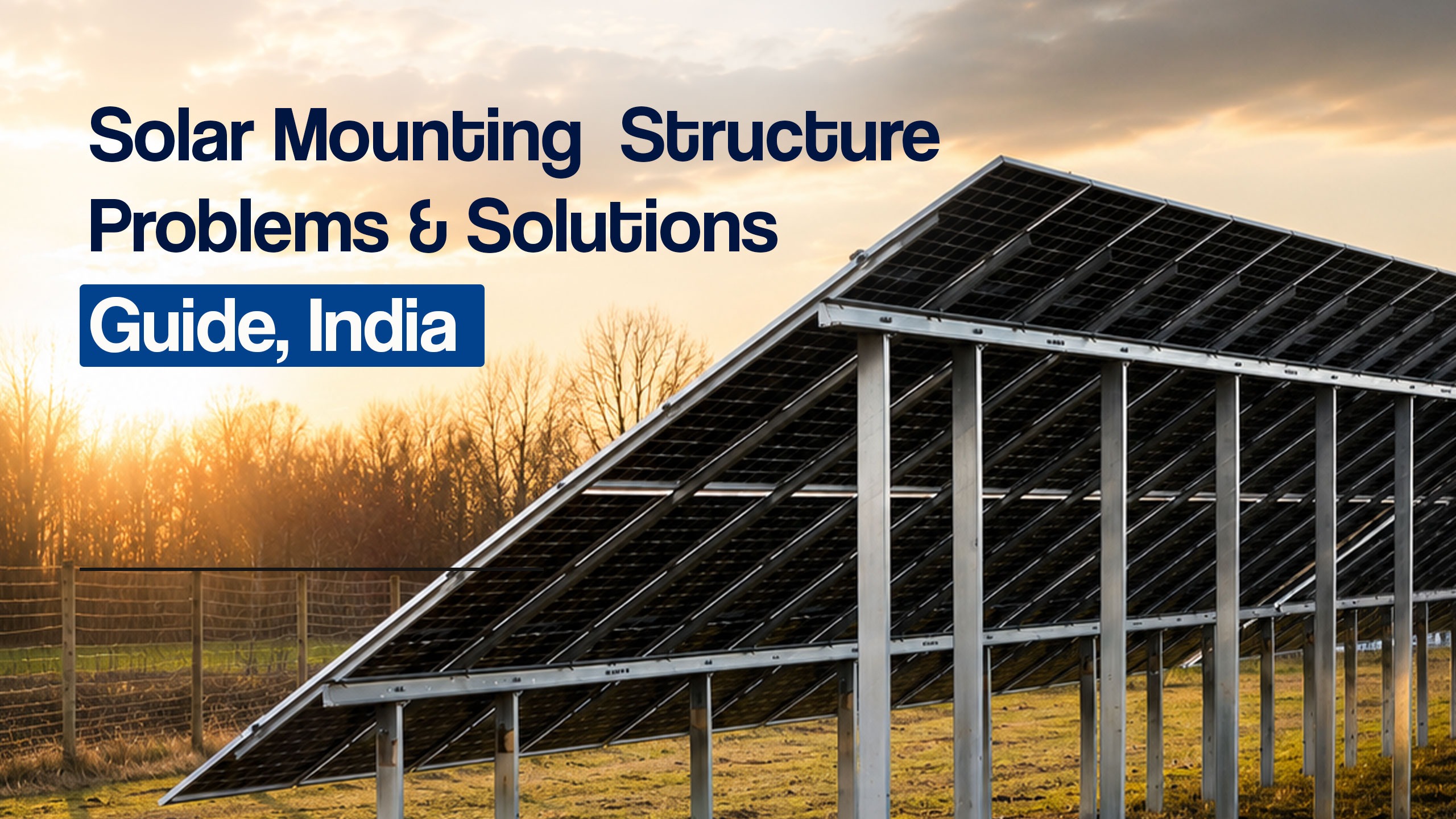
Solar Mounting Structure Problems in india & How To Prevent Them
Solar power projects in India are growing rapidly across industrial, commercial, and utility-scale sectors. While solar panels often receive most of the attention, the mounting structure plays an equally important role in overall system performance and long-term reliability.
A poorly designed or improperly installed solar mounting structure can lead to reduced generation efficiency, corrosion, structural instability, water leakage, and even complete project failure. Many EPC companies and installers focus heavily on module selection but underestimate the engineering importance of mounting systems.
In Indian conditions, mounting structures face extreme heat, coastal humidity, heavy rainfall, dust accumulation, and strong wind loads. These environmental factors make quality engineering and installation practices critical for every solar project.
This guide explains the most common solar mounting structure problems in India and provides practical solutions based on real-world project experience.
Why Solar Mounting Structure Quality Matters
A solar mounting structure supports the complete weight of solar modules while maintaining the correct tilt angle and alignment for maximum power generation.
The mounting system directly affects:
- Plant stability
- Energy generation efficiency
- Wind resistance
- Structural safety
- Maintenance requirements
- Project lifespan
Low-quality mounting structures often increase operational costs due to frequent maintenance, corrosion repairs, and alignment corrections.
For large-scale solar plants, even small structural issues can lead to significant energy losses over time.
1. Corrosion Problems in Solar Mounting Structures
Corrosion is one of the most common solar mounting structure problems in India, especially in coastal and high-humidity regions.
Why Corrosion Happens
- Poor galvanization
- Low zinc coating thickness
- Water accumulation
- Chemical exposure
- Low-quality raw material
Corrosion weakens structural strength and reduces the lifespan of the mounting system.
Solution
Use hot-dip galvanized mounting structures with higher zinc coating standards. For coastal projects, manufacturers should recommend structures with strong anti-corrosion protection and proper drainage design.
Regular inspection and preventive maintenance also help identify early rust formation before major damage occurs.
2. incorrect Tilt Angle installation
Tilt angle variation is another major issue affecting solar plant performance.
Common Causes
- Improper installation practices
- Uneven foundation levels
- inaccurate design calculations
- Site execution errors
Even small tilt angle differences can reduce energy generation efficiency.
Solution
Ensure accurate site surveying before installation. Use precision-engineered mounting systems and maintain strict alignment checks during erection.
For utility-scale projects, laser-based alignment tools improve installation accuracy and reduce generation losses.
3. Weak Structural Design Against Wind Load
India experiences strong seasonal winds, cyclones, and extreme weather conditions in many regions.
Weak solar mounting structures may:
- Bend under pressure
- Experience joint failures
- Cause module displacement
- Collapse during storms
Solution
Structural design should always consider local wind load conditions according to project location.
Using properly engineered support sections, strong foundation systems, and certified structural calculations significantly improves safety.
Wind tunnel analysis may also be required for high-capacity projects.
4. Poor Foundation Stability
Foundation failure is one of the most expensive solar mounting structure problems to repair.
Causes
- Weak soil conditions
- Improper pile depth
- inadequate civil design
- Water erosion
When the foundation shifts, the entire structure alignment gets affected.
Solution
Conduct proper geotechnical soil testing before installation. Foundation design must match the site’s soil bearing capacity and environmental conditions.
Experienced EPC teams should verify pile depth and foundation quality during construction.
5. Loose Fasteners And Joint Failures
Improper fastening creates vibration issues and long-term structural instability.
Common Reasons
- incorrect torque application
- Poor-quality bolts
- Thermal expansion movement
- Lack of maintenance
Loose joints increase the risk of panel movement during wind pressure.
Solution
Use high-quality galvanized fasteners and follow manufacturer torque specifications during installation.
Periodic tightening inspections are essential for maintaining structural stability.
6. Water Leakage in Rooftop installations
Rooftop solar projects often face water seepage issues after installation.
Causes
- Improper roof drilling
- Poor sealing methods
- incorrect mounting placement
Water leakage damages both the building structure and mounting system.
Solution
Use non-penetrative mounting systems whenever possible. Proper waterproof sealing materials and trained installation teams reduce leakage risks significantly.
7. Thermal Expansion Problems
Solar mounting structures expand and contract continuously due to temperature variations.
In India’s high-temperature regions, thermal movement can:
- Loosen joints
- Distort alignment
- Stress mounting components
Solution
Engineers should include thermal expansion allowances in the design stage.
Using flexible connection systems and proper spacing helps absorb thermal movement safely.
8. Module Misalignment
Improper module alignment affects both aesthetics and energy generation efficiency.
Causes
- Uneven structure installation
- incorrect spacing
- Poor site supervision
Solution
Use pre-engineered mounting systems with accurate manufacturing tolerances. Proper quality checks during installation improve alignment consistency.
9. Low-Quality Raw Material Usage
Many low-cost mounting systems use substandard steel or inadequate galvanization to reduce manufacturing costs.
Risks
- Faster corrosion
- Reduced load capacity
- Structural weakness
- Frequent maintenance
Solution
Always verify material certifications, galvanization standards, and steel thickness before procurement.
Trusted manufacturers provide complete technical documentation and testing reports.
10. inadequate Drainage Design
Water accumulation near mounting foundations increases corrosion and foundation weakening.
Solution
Proper site drainage planning is essential for long-term structural safety.
Installers should ensure rainwater flows away from the mounting foundation area.
11. Cable Management Issues
Poor cable routing creates safety and maintenance challenges.
Common Problems
- Cable damage
- Water exposure
- Rodent attacks
- Electrical hazards
Solution
Use structured cable trays and proper clamping systems during installation.
12. Improper Earthing integration
Improper grounding affects electrical safety and increases lightning damage risks.
Solution
Integrate earthing systems correctly with the mounting structure and perform regular grounding inspections.
13. Manufacturing Tolerance Errors
Inaccurate manufacturing dimensions create assembly problems on-site.
Solution
Precision manufacturing and strict quality control improve installation efficiency and structural accuracy.
14. Poor Maintenance Planning
Many solar plants ignore mounting structure maintenance after installation.
Solution
Create scheduled inspection programs for:
- Corrosion checks
- Bolt tightening
- Alignment verification
- Foundation inspection
Preventive maintenance reduces major repair costs.
15. Choosing Price Over Engineering Quality
One of the biggest mistakes in solar projects is selecting mounting systems based only on cost.
Cheap structures may reduce initial investment but increase operational risks and long-term maintenance expenses.
Solution
Focus on:
- Structural engineering quality
- Material certification
- Galvanization standards
- installation expertise
- Manufacturer experience
Reliable mounting systems improve plant performance and protect long-term investment.
Best Practices For Solar Mounting Structure installation
To avoid common solar mounting structure problems, EPC companies and installers should follow these best practices:
- Conduct detailed site surveys
- Use certified raw materials
- Verify structural calculations
- Follow proper galvanization standards
- Ensure accurate alignment
- Perform regular maintenance inspections
- Use experienced installation teams
Quality installation practices improve both safety and energy generation efficiency.
Conclusion
Solar mounting structures are the foundation of every successful solar project. In Indian environmental conditions, engineering quality, corrosion protection, and proper installation practices play a critical role in long-term plant performance.
Most solar mounting structure problems can be prevented through:
- Proper design
- Certified materials
- Experienced engineering
- Correct installation
- Preventive maintenance
As solar adoption continues to grow across India, project developers and EPC companies must prioritize structural reliability instead of focusing only on short-term cost savings.
Choosing the right mounting structure partner helps ensure better durability, lower maintenance costs, and improved energy generation over the lifetime of the project.
Contact us today planning a reliable solar project? Connect with our engineering team for durable, high-performance solar mounting structures designed for Indian environmental conditions.
FAQs
1. What are the most common solar mounting structure problems?
The most common solar mounting structure problems include corrosion, tilt angle variation, loose fasteners, weak foundations, and wind-load failures.
2. Why do solar mounting structure problems occur in India?
Solar mounting structure problems in India occur due to extreme heat, humidity, poor galvanization, and incorrect installation practices.
3. How can corrosion-related solar mounting structure problems be prevented?
Using hot-dip galvanized steel and higher zinc coating standards helps prevent corrosion-related solar mounting structure problems.
4. Can tilt angle variation affect solar plant performance?
Yes, tilt angle variation can reduce power generation efficiency and create long-term solar mounting structure problems.
5. Why is structural design important in solar mounting structures?
Proper structural design improves wind resistance, load distribution, and long-term durability.